

Key Takeaways
- Healthcare apps can improve patient access, communication, and clinical workflows.
- New Zealand's Privacy Act 2020 and Health Information Privacy Code 2020 are important considerations.
- Development costs may range from NZD 10,000 to NZD 100,000+, depending on complexity.
- Secure integrations, accessible design, and reliable technology are essential.
- AI and telehealth can add value when implemented responsibly.
Healthcare App Development in New Zealand: Building Compliant Digital Health Solutions
Healthcare providers in New Zealand are increasingly adopting digital solutions to improve patient access, streamline clinical workflows, and support more connected care. From appointment booking and telehealth consultations to electronic health records and remote monitoring, healthcare apps are changing how patients and professionals interact.
However, building a healthcare app requires more than a convenient interface. Developers must consider patient privacy, secure data handling, interoperability, accessibility, and applicable New Zealand health regulations from the beginning.
Investing in healthcare app development services can help organisations create digital health platforms that address these requirements while supporting reliable patient experiences. A well-planned solution can connect patients, clinicians, and healthcare systems while keeping security and compliance central to development.
Understanding the key requirements, emerging technologies, and development process helps businesses plan healthcare applications that are practical, secure, and ready to evolve with changing healthcare needs.
Digital Healthcare Landscape in New Zealand: Key Trends and Developments
New Zealand's healthcare sector is increasingly using digital tools to improve access to services, coordinate care, and reduce administrative workloads. Telehealth, electronic health records, online appointment systems, and patient portals are helping connect patients with healthcare providers.
Growing Demand for Convenient Care
Patients increasingly value flexible appointment booking, remote consultations, prescription information, and access to their health records. Mobile-friendly platforms can make these services easier to access, particularly for people in rural or underserved communities.
Connected Health Information
Healthcare providers need reliable ways to share relevant patient information across clinical systems. Interoperability and secure data exchange can support continuity of care while reducing fragmented records and duplicate administrative work.
Digital Transformation Across Providers
Hospitals, general practices, specialist clinics, and community health services have different technology requirements. Healthcare applications must reflect these workflows while remaining accessible to patients with varying levels of digital confidence.
Focus on Privacy and Trust
Health information is highly sensitive. New Zealand organisations must consider applicable privacy and health-information requirements, including the Privacy Act 2020 and the Health Information Privacy Code 2020, when designing digital services.
For businesses investing in mobile app development in New Zealand, understanding this landscape helps ensure that healthcare solutions address real patient and provider needs rather than simply digitising existing processes.
Key Aspects of Healthcare App Development for Modern Medical Services
Healthcare applications require careful planning because they handle sensitive information and support important clinical workflows. These key aspects help organisations build solutions that are useful, secure, and suitable for New Zealand's healthcare environment.
Patient-Centred Design
Design simple interfaces for appointment booking, telehealth, prescriptions, and health records. Clear navigation, accessible layouts, and readable content help patients with different abilities and levels of digital confidence.
Data Security and Privacy
Protect health information through encryption, secure authentication, role-based access, and audit logs. Collect only necessary data and establish clear retention and deletion policies.
Regulatory Compliance
Identify applicable New Zealand health information, privacy, clinical safety, and consumer-protection requirements before development. Compliance should influence architecture, workflows, documentation, and testing.
Interoperability and Integration
Plan secure connections with electronic health record systems, laboratory services, pharmacy platforms, and appointment-management tools. Use suitable APIs and agreed data standards to support reliable information exchange.
Reliable healthcare app development services help connect these systems securely while maintaining consistent data exchange and efficient clinical workflows.
Clinical Accuracy and Safety
Validate clinical workflows, notifications, and health-related outputs. Any AI-assisted functionality should be evaluated carefully and supported by appropriate clinical oversight.
Performance and Reliability
Healthcare apps should handle sensitive workflows consistently. Use monitoring, backups, recovery plans, and performance testing to minimise disruptions.
Scalability and Maintenance
Plan for changing user numbers, new integrations, and evolving requirements. Ongoing updates should address security vulnerabilities, compatibility issues, and feedback from patients and healthcare professionals.
Compliance and Data Privacy Requirements for Healthcare App Development
Healthcare apps in New Zealand must protect sensitive health information while supporting safe and reliable digital care. Consider compliance from the planning stage rather than adding it after development.
Privacy Act 2020 and Health Information Privacy Code 2020
The Privacy Act 2020 establishes New Zealand's general privacy framework, while the Health Information Privacy Code 2020 (HIPC) sets specific rules for handling health information. Developers should understand how these requirements apply to collecting, storing, accessing, using, and disclosing patient data.
Consent and Transparent Data Collection
Apps should clearly explain what information they collect, why it is needed, and how it will be used. Consent and permissions should be handled appropriately for the intended service, particularly when collecting sensitive details or sharing information with healthcare providers and third-party platforms.
Security Controls and Access Management
Healthcare applications should incorporate safeguards such as:
- Encryption: Protect sensitive information during transmission and storage.
- Role-based access: Limit records to authorised clinicians, administrators, and patients.
- Multi-factor authentication: Add protection for accounts with access to sensitive information.
- Audit logs: Record important actions involving patient data.
- Secure backups: Support data recovery and business continuity.
Data Breach Response
Development teams should establish procedures for identifying, assessing, and responding to potential data breaches. Organisations must understand their applicable notification obligations and maintain a clear process for escalating security incidents.
Interoperability and Third-Party Services
Connections with electronic health records, laboratories, pharmacies, and telehealth providers should use secure, well-defined interfaces. Before integrating external services, teams should review their privacy practices, access permissions, contractual responsibilities, and data-handling arrangements.
Compliance requirements depend on the app's purpose, the organisations involved, and the information being processed. Consulting appropriate New Zealand privacy and healthcare specialists can help teams identify applicable obligations before launch.
Essential Features Every Modern Healthcare App Should Include
A healthcare app should make it easier for patients to access services while helping healthcare professionals manage information and coordinate care. The features required will depend on whether the platform supports patients, clinicians, hospitals, or multiple healthcare providers.
| Feature | Purpose |
|---|---|
| Patient Registration and Profiles | Allow users to create accounts, manage personal details, and maintain relevant health information. |
| Appointment Scheduling | Enable patients to book, reschedule, or cancel appointments and receive reminders. |
| Electronic Health Records | Provide authorised access to medical histories, prescriptions, test results, and clinical notes. |
| Telehealth Consultations | Support remote consultations through secure video, audio, or messaging tools. |
| Prescription Management | Help clinicians issue prescriptions and allow patients to review medication instructions and reminders. |
| Payments and Billing | Manage consultation fees, invoices, receipts, and supported payment methods. |
| Notifications and Reminders | Send appointment updates, follow-up reminders, and relevant care notifications. |
| Healthcare Provider Dashboard | Help clinicians review patient information, manage schedules, and coordinate consultations. |
| Admin Dashboard | Manage users, permissions, service configurations, reports, and operational workflows. |
| Secure Messaging | Enable communication between patients and authorised healthcare professionals. |
AI and Emerging Technologies Driving Innovation in Digital Health
Artificial intelligence and connected technologies are expanding what healthcare applications can do. In New Zealand, these capabilities can support administrative efficiency, remote care, and more informed clinical workflows when implemented with appropriate safeguards.
AI-Powered Clinical and Administrative Support
AI can help summarise patient records, organise clinical notes, classify incoming queries, and automate routine administrative tasks. These applications can reduce repetitive work and help healthcare teams manage information more efficiently. Clinical outputs should be reviewed by qualified professionals before being used to guide patient care.
Predictive Analytics and Personalised Care
Machine learning can analyse suitable health datasets to identify patterns and estimate potential risks. Depending on the use case and evidence available, these insights may help providers prioritise follow-ups, monitor chronic conditions, or tailor patient support. Models require appropriate validation to reduce errors and account for limitations in the underlying data.
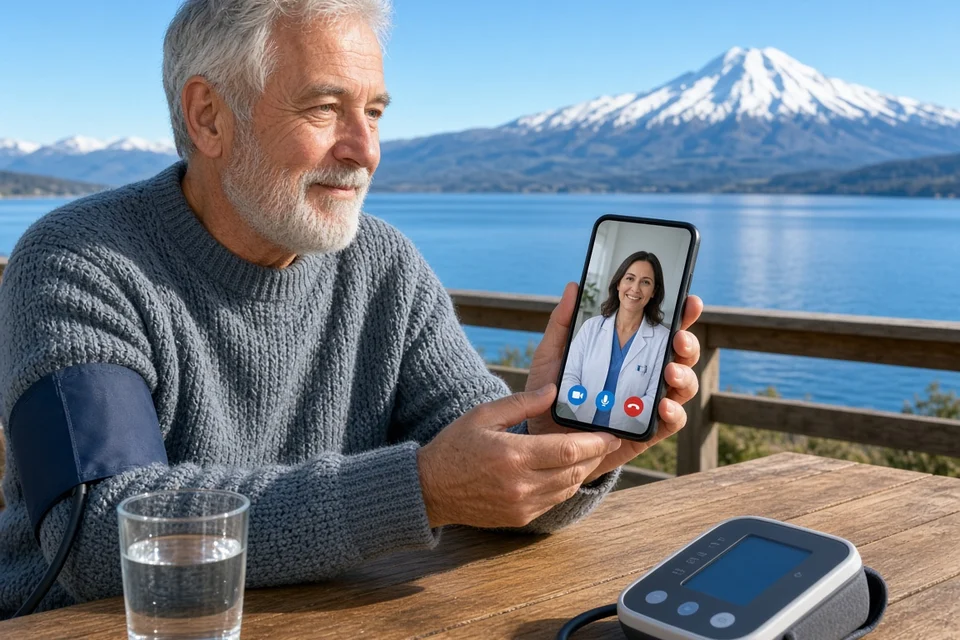
Telehealth and Remote Patient Monitoring
Video consultations, connected wearables, and remote monitoring devices can help patients share relevant health information outside traditional clinical settings. Healthcare professionals can review measurements and follow changes over time, while defined escalation procedures help determine when in-person assessment may be needed.
Interoperability and Connected Health Systems
Secure APIs and standardised data formats can help healthcare applications exchange information with electronic health records, laboratories, pharmacies, and other approved systems. Reliable integration reduces fragmented workflows and helps authorised providers access relevant information when needed.
Implementing AI Responsibly
Successful AI app development in New Zealand requires more than integrating a model into an application. Teams should assess data quality, privacy, security, accuracy, clinical risk, and the intended use of each AI feature. They should also test performance across relevant patient groups and establish human oversight where decisions could affect health outcomes.
Healthcare App Development Cost and Timeline in New Zealand
The cost of developing a healthcare app in New Zealand depends on its features, supported platforms, security requirements, third-party integrations, and clinical complexity. A basic patient booking app generally requires less investment than a platform with telehealth, electronic health records, AI capabilities, and multiple healthcare integrations.
Estimated Development Cost and Timeline
| Healthcare App Type | Estimated Cost (NZD) | Development Timeline |
|---|---|---|
| Basic Appointment Booking App | NZD 10,000–20,000 | 2–3 months |
| Mid-Level Healthcare App | NZD 20,000–40,000 | 3–5 months |
| Advanced Telehealth App | NZD 40,000–70,000 | 5–7 months |
| Enterprise Healthcare Platform | NZD 70,000–100,000+ | 7–12+ months |
These figures are indicative planning estimates, not fixed market prices. The final software development cost in New Zealand will depend on the project scope, the development team's rates, required integrations, testing, and compliance work.
What Influences the Budget?
- Feature requirements: Appointment scheduling and basic profiles are generally simpler than telehealth, remote monitoring, or AI-assisted workflows.
- Platform selection: Supporting web, iOS, and Android can increase design, development, and testing effort.
- Security and compliance: Privacy controls, access management, audit logging, and security testing require dedicated planning.
- Third-party integrations: Electronic health records, laboratory systems, payment gateways, and video services can increase implementation complexity.
- Design and accessibility: Patient-facing interfaces should be easy to navigate and accommodate users with different accessibility needs.
- Ongoing maintenance: Hosting, security updates, bug fixes, API changes, and feature improvements add to the long-term budget.
How to Plan the Investment
Start by identifying the main users, essential workflows, and minimum features needed for the first release. A focused MVP can help validate demand before investing in more advanced capabilities.
The project budget should also account for post-launch support and mobile app maintenance in New Zealand, including security updates, performance monitoring, compatibility improvements, and ongoing compliance reviews.
A detailed scope and milestone-based estimate will provide a more reliable budget than a single headline development price.
Technology Stack for Healthcare App Development
The right technology stack depends on the app's users, integrations, security requirements, and expected growth. These are common choices for New Zealand healthcare applications.
| Technology Layer | Common Technologies | Purpose |
|---|---|---|
| Web Frontend | React.js, Next.js, Angular | Patient portals, clinician dashboards, and administration interfaces |
| Mobile Development | Flutter, React Native, Swift, Kotlin | Patient and healthcare professional mobile apps |
| Backend Development | Node.js, Python, Java, .NET | Business logic, APIs, appointments, and clinical workflows |
| Database | PostgreSQL, MySQL, MongoDB | Patient profiles, appointments, and application data |
| Cloud Infrastructure | AWS, Microsoft Azure, Google Cloud | Hosting, backups, deployment, and scalability |
| AI and Machine Learning | Python, PyTorch, TensorFlow, and managed AI APIs | Record summarisation, workflow automation, and decision support |
| Telehealth | WebRTC, secure video APIs | Remote consultations and follow-ups |
| Integration Standards | HL7, FHIR, REST APIs, webhooks | Data exchange with compatible healthcare systems |
| Security | OAuth 2.0, OpenID Connect, MFA | Authentication, authorisation, and access management |
| Monitoring and Analytics | OpenTelemetry, Grafana, Prometheus | Application health, performance, and operational insights |
Healthcare App Development Process: Essential Stages from Planning to Launch
Building a healthcare app requires a structured process that balances user needs, technical reliability, data protection, and clinical requirements. Following clearly defined stages helps teams manage risks and validate the application before launch.
1. Market Research and Requirement Analysis
Identify the target users, healthcare needs, competing solutions, and gaps in existing services. Gather requirements from patients, clinicians, administrators, and other stakeholders to define the app's purpose and scope.
2. Compliance and Risk Assessment
Determine which New Zealand privacy, health information, security, and clinical requirements apply to the intended service. Identify potential risks early and establish appropriate safeguards.
3. Feature Planning and Project Roadmap
Prioritise essential features such as appointment booking, patient records, or telehealth. Separate MVP requirements from advanced capabilities to keep the initial scope manageable.
4. UI/UX Design and Prototyping
Create user flows, wireframes, and interactive prototypes. Test the design with representative users and consider accessibility, readability, and ease of use for people with different levels of digital confidence.
5. Architecture and Technology Selection
Select the frontend, backend, database, hosting environment, and integration approach. Define access permissions, data flows, backup arrangements, and security controls before implementation begins.
6. Application Development and Integration
Build the application in manageable modules, implementing core features and connecting approved third-party services. Use secure APIs and validate data exchanged with healthcare systems.
7. Testing and Quality Assurance
Test functionality, performance, usability, accessibility, security, and compatibility across supported devices. Validate clinical workflows and AI-assisted features where applicable, and resolve identified issues before release.
8. Deployment, Monitoring, and Maintenance
Release the app through the appropriate channels, monitor its performance, and establish a process for handling incidents and user feedback. Ongoing updates should address vulnerabilities, operating-system changes, integration updates, and evolving requirements.
Common Healthcare App Development Challenges and Practical Solutions
Healthcare app development involves challenges that extend beyond building features. Addressing them early helps organisations deliver secure, reliable, and user-friendly digital health services.
| Challenge | Why It Matters | Practical Solution |
|---|---|---|
| Data Privacy and Security | Healthcare apps handle sensitive personal and medical information. | Apply encryption, access controls, secure authentication, and regular security assessments. |
| Legacy System Integration | Existing healthcare systems may use different data formats and interfaces. | Use secure APIs, agreed standards such as HL7 and FHIR, and data mapping to connect systems reliably. |
| Regulatory Requirements | Privacy and clinical obligations vary according to the app's purpose and functionality. | Assess applicable requirements early and involve qualified compliance specialists. |
| User Adoption | Patients and healthcare professionals may have different digital skills and workflows. | Conduct user research, usability testing, and accessibility reviews. |
| Performance and Reliability | Slow or unavailable services can disrupt appointments and clinical workflows. | Use monitoring, automated testing, backups, and scalable infrastructure. |
| AI Accuracy and Clinical Risk | Incorrect AI outputs can create risks when used in healthcare decisions. | Validate models, communicate limitations, and maintain appropriate professional oversight. |
| Ongoing Maintenance | APIs, operating systems, security threats, and healthcare requirements can change. | Plan regular updates, incident response, and continuous quality reviews. |
Managing Long-Term Operational Risks
Healthcare software needs ongoing attention after launch. Regular mobile app maintenance in New Zealand can help teams address security vulnerabilities, resolve defects, maintain compatibility, and respond to changing integration requirements.
Organisations should also establish clear responsibilities for incident management, data access reviews, backups, and software updates. These practices help protect service continuity while keeping the application aligned with operational and compliance needs.
Key Benefits of Compliant Digital Health Solutions for Healthcare Providers
Well-designed healthcare applications can improve access to services, simplify administrative tasks, and help providers coordinate patient care. When privacy, security, and usability are built into the system, these benefits can be delivered more reliably.
Improved Access to Healthcare
Online appointment booking, telehealth consultations, and digital follow-ups can make healthcare services more convenient. Remote options may be particularly valuable for people living in rural areas or facing travel and mobility challenges.
More Efficient Clinical Workflows
Automated scheduling, digital records, and streamlined administrative processes can reduce repetitive tasks. Healthcare professionals can spend less time managing disconnected systems and more time supporting patients.
Better Information Sharing
Secure integration with compatible healthcare systems can help authorised professionals access relevant patient information when needed. This can improve coordination between providers and support continuity of care.
Stronger Patient Engagement
Appointment reminders, medication notifications, and access to relevant health information can help patients stay informed and participate more actively in their care.
Greater Operational Visibility
Reporting and analytics can help healthcare organisations monitor appointment patterns, service usage, and operational performance. These insights can inform resource planning and identify opportunities to improve service delivery.
A More Reliable Foundation for Growth
Scalable architecture and planned maintenance make it easier to introduce new services, connect additional systems, and respond to changing requirements. A compliant, well-maintained platform can therefore support long-term digital health initiatives without compromising essential safeguards.
Conclusion
Healthcare app development in New Zealand offers opportunities to improve access to care, streamline clinical workflows, and strengthen communication between patients and healthcare providers. However, successful solutions require more than useful features: they must also address privacy obligations, security, interoperability, accessibility, and clinical safety.
Businesses should begin with clear user requirements, select a suitable technology stack, and follow a structured development process that includes research, compliance assessment, testing, and ongoing maintenance. AI and telehealth capabilities can add value when they are implemented responsibly and supported by appropriate professional oversight.
By investing in a secure, scalable, and user-focused solution, healthcare organisations can build digital services that meet current needs while remaining adaptable to future changes in New Zealand's healthcare landscape.
Frequently Asked Questions
1. How much does healthcare app development cost in New Zealand?
Healthcare app development may cost around NZD 10,000–100,000+, depending on features, integrations, and complexity.
2. How long does it take to develop a healthcare app?
A basic app may take 2–3 months, while a complex healthcare platform can take 7–12 months or longer.
3. What features should a healthcare app include?
Common features include appointment booking, patient records, telehealth, prescription management, notifications, and secure messaging.
4. What privacy laws apply to healthcare apps in New Zealand?
The Privacy Act 2020 and Health Information Privacy Code 2020 are key requirements for handling health information.
5. Can AI be integrated into healthcare applications?
Yes. AI can support record summarisation, administrative automation, and decision support when appropriately validated.
6. Which technologies are used to build healthcare apps?
Common choices include React, Flutter, Node.js, Python, PostgreSQL, cloud platforms, and healthcare integration standards such as FHIR.
7. How can healthcare apps protect patient information?
Encryption, role-based access, multi-factor authentication, audit logs, and regular security testing help protect sensitive data.
8. Why is ongoing healthcare app maintenance important?
Maintenance helps address security vulnerabilities, fix bugs, maintain compatibility, and keep integrations working reliably.